






Sustainability in contemporary retail spaces is no longer a hidden strategy. It is becoming a visible and tangible element of space that allows customers to understand how a store operates, where food comes from, and how the building affects the environment. Design is increasingly based on natural materials, local production, and solutions that can be seen and experienced during shopping. This approach creates an emotional connection between the space and its visitors, and sustainable solutions become part of the store’s own narrative. Customers therefore participate not only in purchasing but also in the experience of a more responsible way of life.
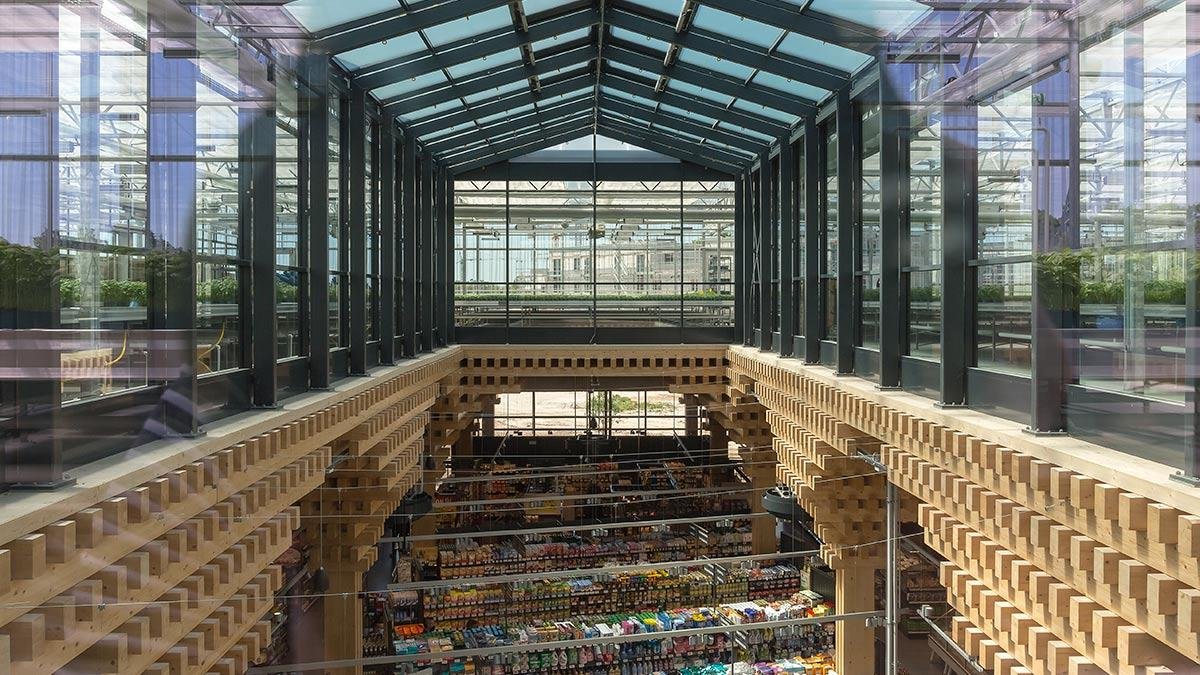
REWE: Wiesbaden, Germany (Image via https://www.ubm-development.com/magazin/en/rewe-green-farming/ )
The Ville Saint-Laurent project began as a response by the German retail chain REWE to the question of how future supermarkets can become more sustainable and transparent. The idea had been developing for years through earlier Green Building concepts that REWE has implemented since 2009 at more than 200 locations, but with the Green Farming store concept in Wiesbaden the company sought to completely revise the supermarket model and incorporate food production into the very structure of the retail space. The project was planned from 2016 to 2021, and the main motivation was to combine retail with local food production, using innovative systems such as aquaponics where fish and plants, for example basil, grow in a symbiotic cycle. Basil and fish are produced directly on the roof and sold in the store or distributed to nearby branches, reducing transport distances and packaging. The system uses up to 90 percent less water than conventional agriculture, demonstrating practical ecological benefits. Architecturally, the building is constructed from large quantities of wood that store carbon, while the glass roof allows abundant natural light and a visible connection between production and sales. The example has been well received in the industry. The store received the Store of the Year 2022 award from the German Retail Federation, and REWE states that the pilot project is already achieving its economic goals and serves as the basis for a standardized model and the future construction of similar centers throughout Germany.
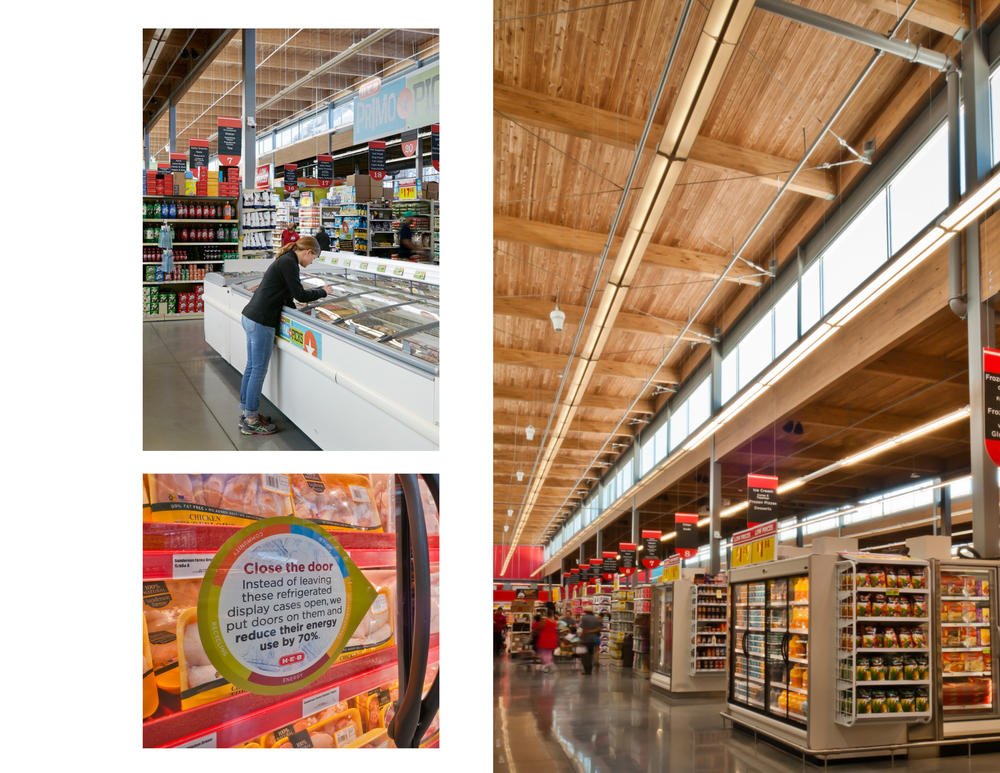
H-E-B at Mueller: Austin, USA (Image via: https://www.aiatopten.org/node/489)
Another example, H-E-B at Mueller, emerged from a different context but with the same goal of responsible design and connection with the local community. It is a supermarket that opened in 2013 in the newly built, step planned Mueller community in Austin, on the site of a former municipal airport. The project is part of a broader vision of sustainable urban development that includes transit oriented architecture, green spaces and pedestrian services, cycling routes, and LEED and location certified buildings. H-E-B invited 16 local neighborhoods and the City of Austin to participate in the design, resulting in a space that includes not only a supermarket but also a meeting area for the community, a café, and outdoor gathering zones. The store meets LEED Gold and Austin Energy Green Building standards, with advanced energy and water systems, including propane based refrigeration systems, LED lighting, daylight use, and solar elements on the roof, enabling a significant reduction in energy consumption compared to the average American store. The project has reduced energy and water consumption and created a more pleasant environment for customers, and these results have positively affected operating costs, enabling the retention of competitive prices. As a store in the heart of a mixed use community, H-E-B has become an important local meeting point, and the inclusion of public space and services demonstrates how a supermarket can be more than just a place of sale.
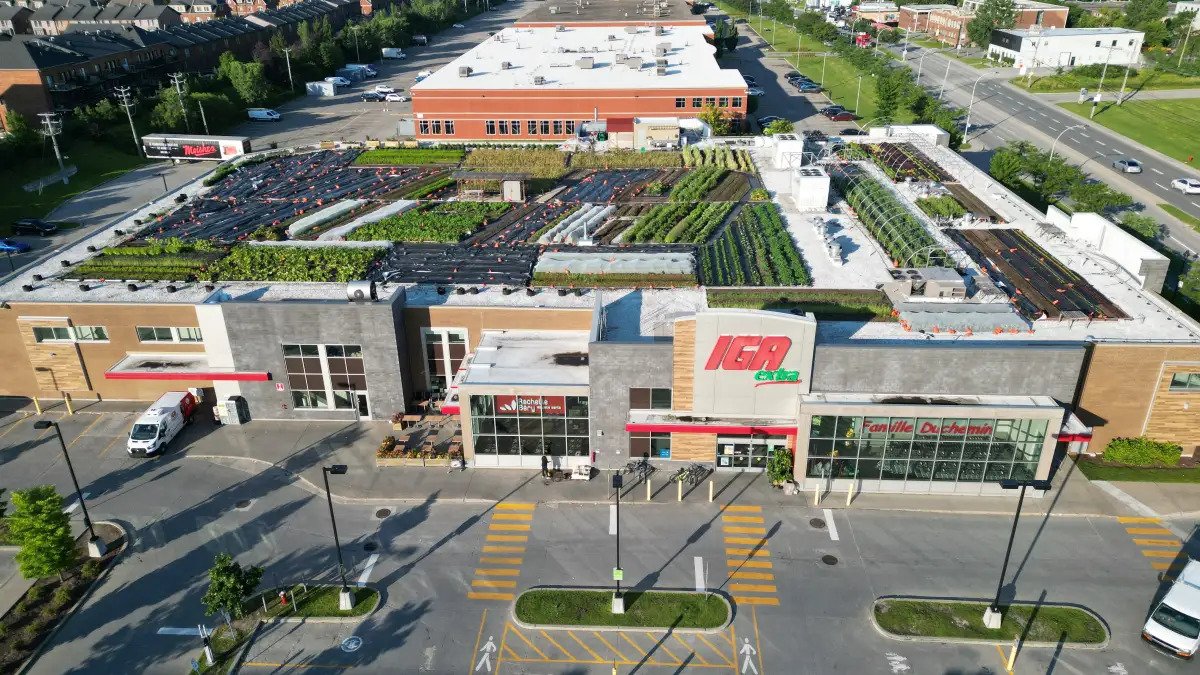
GA Extra Famille Duchemin: Montreal, Canada (Image via: https://globalnews.ca/news/10653133/only-rooftop-garden-canadian-supermarket-expands/ )
The third example comes from Canada and shows how the concept of visible urban food production can function on a smaller scale. In Saint Laurent in Montreal, the supermarket IGA Extra Famille Duchemin implemented a green roof with a rooftop farm where around ten types of vegetables and organic products are grown and then sold within the store. Such rooftop farms, which are part of the city’s broader policy requiring green or white roofs, serve not only to reduce heating and cooling demands but also to feed the community locally, reducing the impact of transport and emissions. This practice supports ideas about addressing urban ecological challenges through the integration of production systems into retail spaces and demonstrates that local production can be part of the retail ecosystem even outside the centers of large corporations.
These three examples show different paths through which retail can become an active participant in sustainability, from integrated food production and low emission architecture to energy efficient spaces that connect community and environment, all with potential economic benefits through reduced energy, water, and transport costs. These projects clearly illustrate that sustainability in retail does not have to be merely a marketing message but can be grounded in real practices that contribute to social and environmental goals while remaining commercially relevant.
 Back to the list