






In the contemporary world of retail, it is increasingly said that stores are no longer just places where we buy products. They are becoming spaces of experience, encounter, and identity. Global brands operating in different countries face the challenge of remaining recognizable while at the same time fitting into the local context. Because of this, many of them are turning to a strategy of localization, meaning the adaptation of their stores to the culture, architecture, and everyday life of the place where they are located.
This approach also reflects changes in customer behavior. Many consumers today show greater interest in authentic experiences and are more willing to accept stores that respect the character of their neighborhood. Instead of uniform, identical spaces like those we used to see in cities around the world, stores are increasingly designed to look as if they belong to a local story.
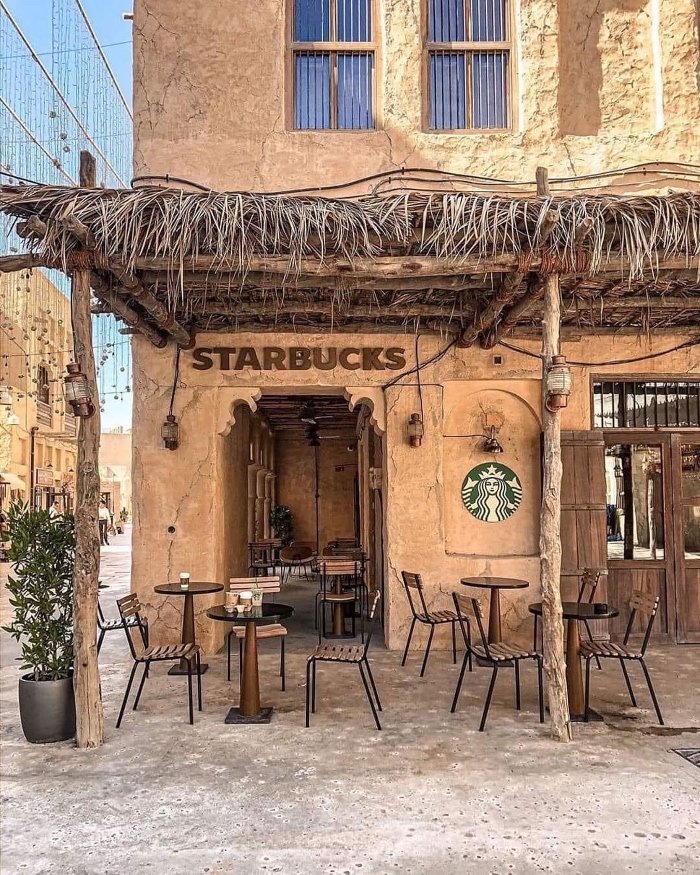
One of the best known examples of this approach comes from the Starbucks chain. Although it is a globally recognizable brand with a very clear visual identity, many of its stores around the world intentionally depart from the standard appearance. A particularly interesting example can be found in the historic Al Seef district in Dubai. This part of the city was reconstructed to resemble an old settlement along Dubai Creek, with traditional architecture and materials that evoke the past of the emirates.
Starbucks designed its store there so that it blends into this environment. Instead of the typical modern façade, the space resembles an old Arabian house. The walls are in warm sandy tones, and wooden elements are used that recall traditional construction methods. Inside the space there are lanterns and decorative details that evoke local aesthetics. Visitors can drink coffee from an internationally known chain, yet do so in a setting that feels like part of the local heritage.
Interestingly, stores like this often become tourist attractions. People come to photograph the space and experience the unusual combination of a global brand and a traditional setting.
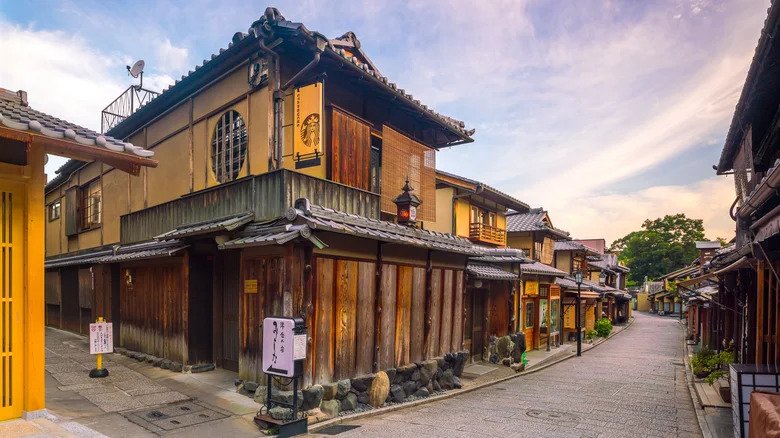
A similar idea has also been applied in Japan, for example in Kyoto. The city is known for its well preserved historic architecture and its strict protection of cultural heritage. When Starbucks opened a store there in an old traditional house called a machiya, the project attracted significant public attention.
Instead of completely modernizing the space, many original elements were preserved. The interior contains wooden structures, paper lamps, and tatami mats that are typical of Japanese homes. Customers can even sit on cushions on the floor, which is part of the traditional Japanese way of occupying a space. In this way Starbucks did not simply open another branch but created a place that respects the local culture and the rhythm of life in the city.
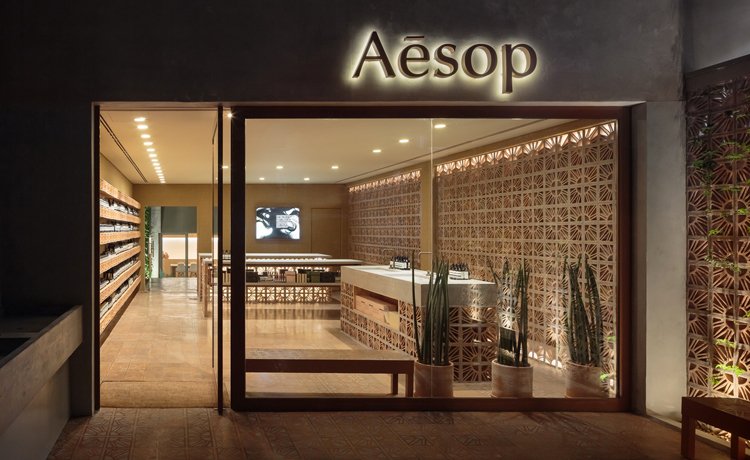
The brand Aesop is known for a similar approach, although in a somewhat different way. Unlike many cosmetic chains that have almost identical store designs in every country, Aesop treats each location as a separate project. Their stores are often designed by well known architects and designers, with a strong focus on materials and ideas that arise from the local context.
An example from the Brazilian city of São Paulo illustrates this approach well. In the Vila Madalena district, which is known for its artistic scene and lively street culture, the store was designed by the famous Brazilian design brothers Campana. Instead of a typical cosmetic shop interior, the space resembles a small urban garden.
Visitors enter through courtyard doors and then arrive in an atrium that feels like an outdoor living room. The space contains wooden benches, a pergola with climbing plants, and materials such as sisal fiber, concrete, and plywood. A special feature is the use of cobogó bricks, perforated building elements characteristic of Brazilian architecture because they allow light and air to pass through. The store floor is also unusual. It is made from bricks filled with concrete that create an interesting pattern.
Such a space feels less like a conventional store and more like a place where people can pause, talk, and spend some time. This is precisely the goal of projects like these. Shopping is transformed into an experience, and the space becomes part of the local urban culture.
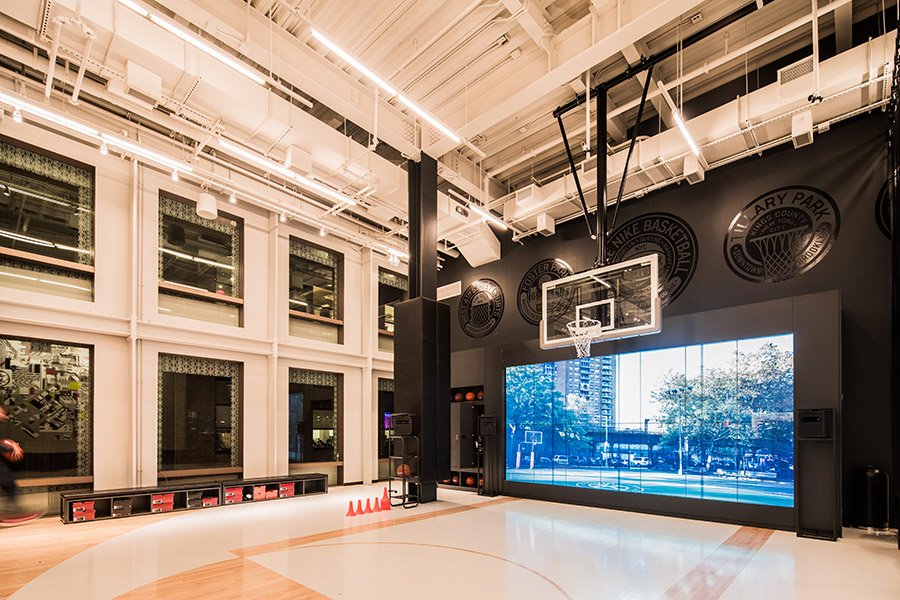
Examples of store localization do not come only from architecture and interior design. Some brands also try to connect their stores with the local way of life and community. Nike opened a large store in the SoHo district of New York that is conceived as a space inspired by street basketball culture.
In many American cities, basketball courts in parks are an important part of the daily life of young people. Nike brought this element into the store itself. The interior is designed in a raw, urban style with concrete, metal fences, and graffiti on the walls. On the ground floor there is also a small basketball court where local teams can practice or compete.
The store therefore becomes a meeting place for the sports community rather than simply a retail point for sports equipment. Such a concept helps the brand connect with local culture and show that it understands the lifestyle of the people who live there.
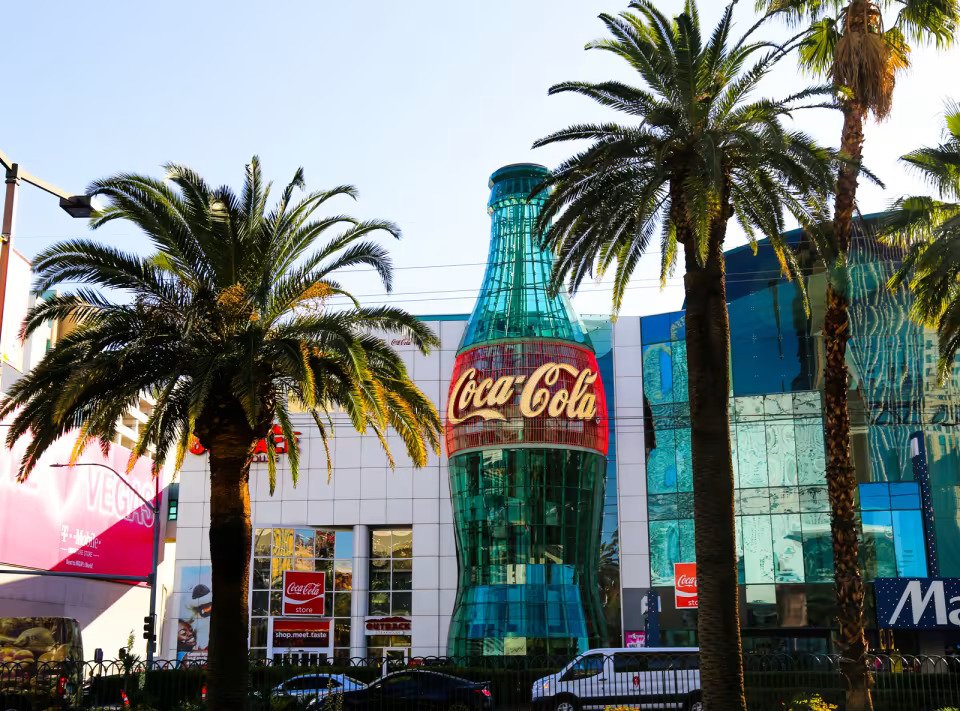
Another interesting example comes from the world of branded experiences. In Las Vegas, Coca Cola opened a store that is strongly inspired by the aesthetics of the city itself. Las Vegas is famous for its lights, neon signs, and its somewhat theatrical atmosphere of entertainment.
The interior of the store uses these elements. Visitors encounter colorful installations, retro signs, and large illuminated displays that recall the culture of classic American advertising. Such a space attracts tourists but also local residents because it creates a sense of playfulness and nostalgia. Buying a souvenir or a drink becomes a brief immersion into the visual world of the city.
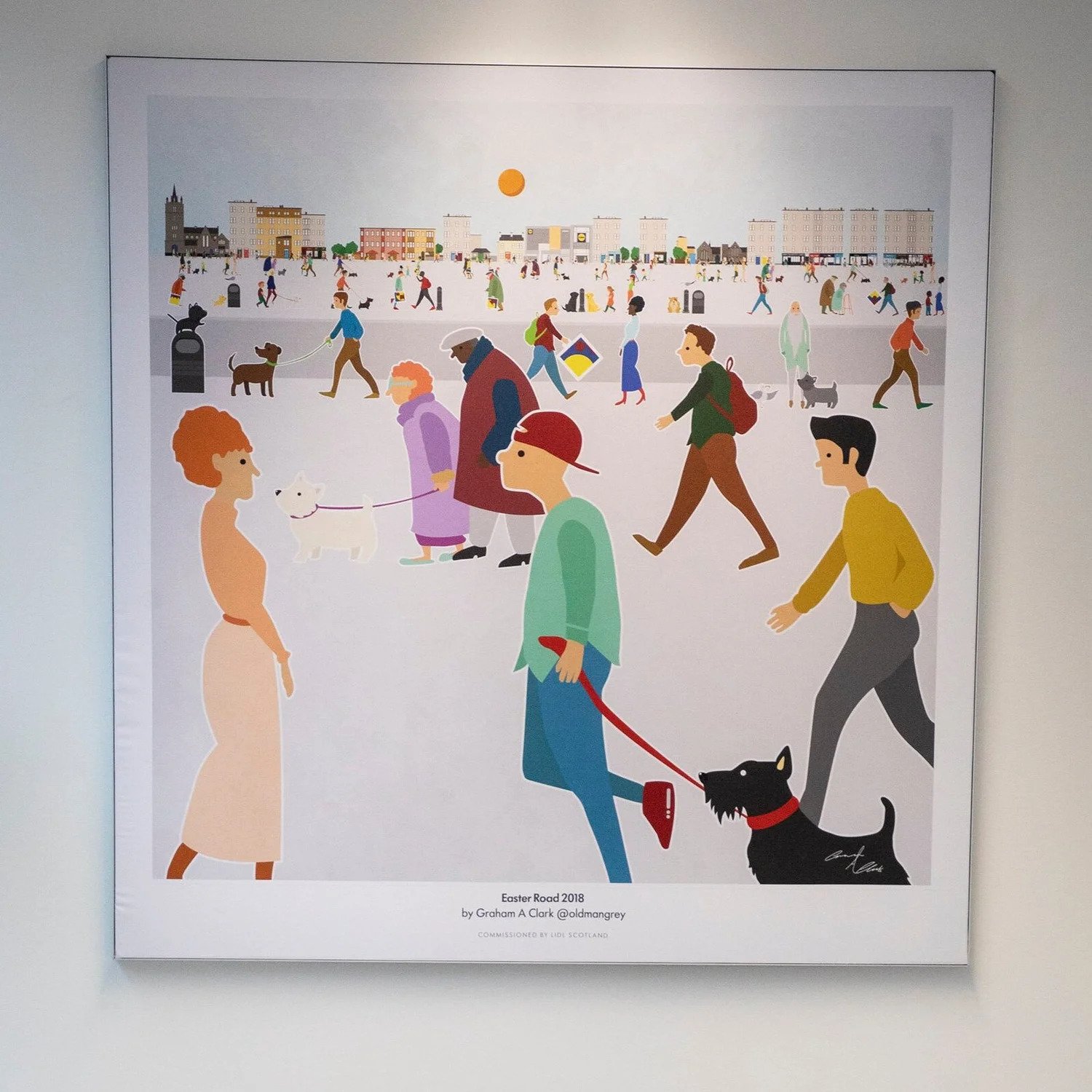
In addition to architecture and interiors, artistic interventions also play an important role in the localization of stores. One interesting example comes from the Scottish city of Edinburgh. On the building of a Lidl supermarket on Easter Road there is a large mural created by the local illustrator Graeme Clark.
The illustration shows scenes from everyday life in the neighborhood. It depicts residents of the street, pets, bicycles, and recognizable elements of local architecture. Such a mural turns the ordinary façade of a store into a kind of public gallery. People who live there can easily recognize motifs from their own surroundings, which gives the space a warmer and more personal character.
Similar initiatives have also been launched by other companies. Walmart has in some American cities hired local artists to paint the walls of stores with scenes from local history or daily life. In this way, stores belonging to large chains gain a unique appearance while local artists receive an opportunity to present their work to a wide audience.
Projects like these are not important only for their aesthetic value. Research on consumer behavior shows that the way a space is designed can influence how long people stay in it. There is a well known analysis by the company Path Intelligence that demonstrated an interesting connection between customer dwell time and sales levels.
According to this study, an increase in the average time customers spend in a store by only one percent can be associated with a sales increase of about 1.3 percent. In other words, if a space encourages people to stay a little longer, there is a greater chance that they will buy something.
For this reason many shopping centers and stores today invest in comfortable seating areas, artistic installations, or small events that encourage social interaction.
Store localization is therefore increasingly understood as a broader strategy of connecting with the city and the community. When a store respects the architecture and culture of the place in which it is located, it more easily becomes part of the everyday life of local residents.
Such spaces also often attract tourists because they offer a different experience from standard global stores. Ultimately, stores that successfully connect their identity with a local story often become places of meeting, photographing, and socializing.
At that point a store stops being just a place of purchase and becomes a small part of the urban life of a city. This transformation represents one of the key directions in the development of contemporary retail architecture.
 Back to the list